
Mulch does three jobs in a Tampa landscape: it keeps moisture in fast-draining sand, it blocks the sunlight weed seeds need to sprout, and it keeps root zones cooler in a summer that can push ground temperatures far past what most shrubs like. It also slowly breaks down, adding a little organic matter to soil that badly needs it. Timing decides how well it does each of those jobs — and how long it stays where you put it.
The best times to mulch in Tampa
Late winter to early spring: the main window
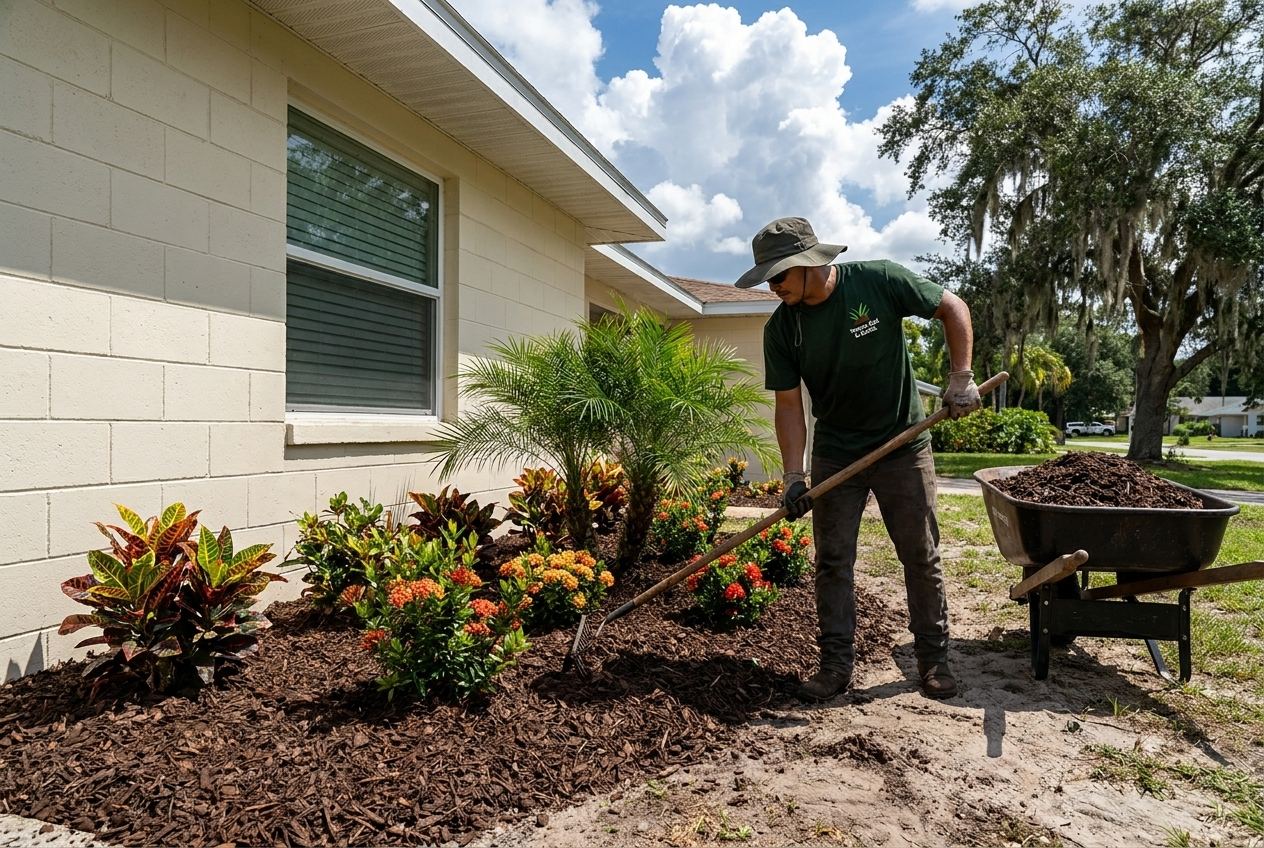
If you mulch once a year, do it from about February into early April. Cooler weather makes the work easier, weeds are not yet growing at full speed, and you get a fresh layer down right before the dry season. April and May are typically the driest, windiest stretch of the Tampa year, and a solid 2 to 3 inch layer of mulch is one of the best ways to hold moisture in beds when irrigation is limited by watering rules. It also gets the beds looking sharp for spring, which matters if you are selling or your HOA does its walk-through around then.
Before or after the rainy season: the top-off window
The second window is either late May, just before the afternoon storms start, or October into November once they ease off. A late-spring top-off adds weight and depth before heavy rain arrives. A fall top-off replaces what the summer washed away or broke down and freshens the color heading into the holidays. Many Tampa homeowners do both: a full refresh in late winter and a lighter top-off in fall.
Why mid-summer is the hardest time to mulch
You can mulch in July, and sometimes you have to — new construction, a fresh planting, a listing photo next week. But the June through September rainy season is tough on fresh mulch. Daily thunderstorms dump a lot of water fast, and on flat Tampa lots that water sheets across beds toward the lowest point. Light, fine mulches and small bark nuggets float and wash out over edging, into the lawn and down the driveway. Dyed mulches can also leach color onto concrete during heavy rain right after installation.
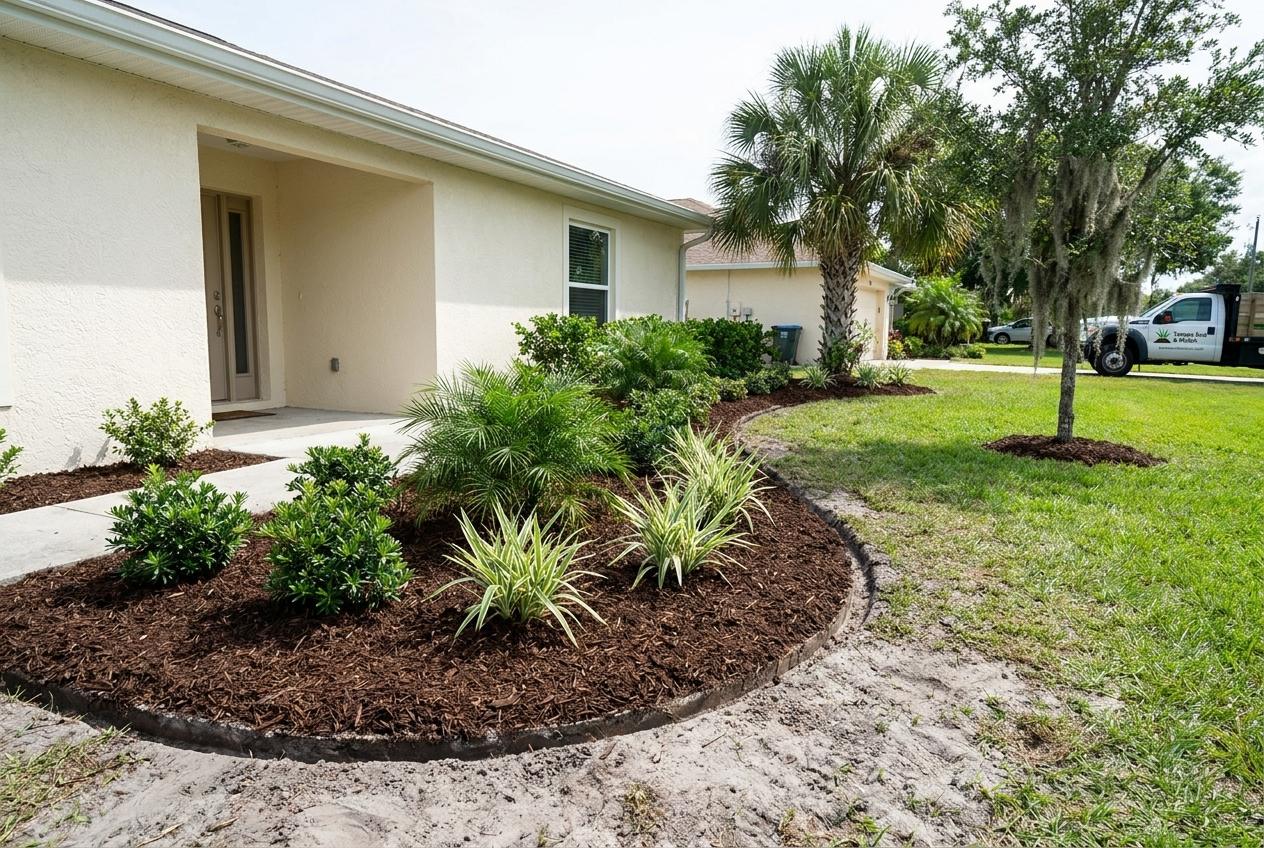
If you mulch in summer, choose a heavier shredded material that knits together, use real edging to hold it in, and keep it out of the paths where storm water runs. Our landscape edging — steel, poured concrete curb or a trenched natural edge — is often the difference between mulch that stays and mulch that ends up in the gutter.
Hurricane season and mulch
Hurricane season runs June through November. Mulch is not the biggest worry when a storm is coming, but it is worth a few minutes of thought:
- Lighter mulches can float. Pine bark nuggets in particular can float off in storm surge or standing water and clog storm drains. In flood-prone and waterfront areas such as Apollo Beach and parts of South Tampa, shredded mulch that mats together usually stays put better.
- Pull mulch back from drains and low spots before a big storm so it does not block water from leaving the yard.
- Check beds after the storm. Rake displaced mulch back, clear it off lawns before it smothers grass, and top off thin areas once things dry out.
- Rubber mulch does not break down, but it can still move in heavy water. It is best kept to playgrounds and contained areas.
How deep should mulch be?
In Tampa’s heat, mulch breaks down faster than in cooler climates, which tempts people to pile it on. Resist. Too-deep mulch stays soggy in the rainy season, can suffocate shallow roots and encourages fungus. Too thin and weeds push straight through. Here is the depth guide we follow:
| Bed type | Target depth | Notes |
|---|---|---|
| Shrub and foundation beds | 2–3 in. | Keep 2–3 in. clear of the slab and siding |
| Around trees (including live oaks and palms) | 2–3 in. in a wide ring | Keep 2–3 in. off the trunk — no “mulch volcanoes” |
| Annual and perennial beds | 2 in. | Finer mulch, kept off stems |
| New plantings | 2–3 in. | Pull back from root balls so water reaches them |
| Slopes and swales | 2 in. shredded or pine straw | Heavier, interlocking materials resist washout |
| Play areas (rubber mulch) | 2–3 in. | Contained by edging or borders |
| Annual top-off | 1–2 in. | Only enough to restore total depth to 2–3 in. |
Mulch types that work in Tampa
Pine bark (nuggets or shredded) is affordable, looks natural and adds a little organic matter as it breaks down, but the nuggets float. Cypress mulch is a long-time Florida favorite with a light color that mats down well; it is widely available here. Eucalyptus mulch is a common alternative that is generally considered a more renewable choice. Dyed red, brown and black mulches hold color well and are often required by HOAs for a uniform look. Rubber mulch lasts for years and suits playgrounds, but does not feed the soil. Pine straw is a different animal altogether — see pine straw vs. mulch for a full comparison.
Whatever you choose, check your HOA rules first. In Westchase, New Tampa and many Riverview communities, mulch color is often specified.
How often to top off mulch in Tampa
Plan on adding a fresh layer at least once a year, and twice for beds in full sun or anywhere that takes heavy runoff. Organic mulch in Tampa’s heat and humidity breaks down noticeably within a year, and color fades fastest in full sun. Before you add more, rake the old layer and check its depth. If there is still 2 inches, a 1-inch top-off restores the look; if it is already 3 or 4 inches deep, rake it out and skip the new mulch this time.
As a rule of thumb, one cubic yard of mulch covers about 100 to 110 square feet at 3 inches deep, or about 160 square feet at 2 inches. Installed mulch typically runs $75 to $120 per cubic yard, and bed clean-out and weed removal beforehand runs about $0.25 to $0.60 per square foot when needed.
Let us handle it
Our mulch installation service includes weeding, edging cleanup and spreading to the right depth with clear space at the slab and trunks. If you would rather do it yourself, mulch delivery drops bulk material in your driveway. We work across Brandon, Westchase, South Tampa and the rest of our service area.