Walk any street in Tampa and you will mostly see one grass: Floratam St. Augustine. It is the default for good reasons — it loves heat, it spreads fast, it is widely grown in Central Florida and most HOAs expect it. But it is not the right answer for every yard, and plenty of brown, thin lawns around town are Floratam planted somewhere it was never going to thrive.
Our soil is the starting point for every recommendation. Most of Hillsborough County sits on grey or tan sand with very little organic matter. It drains fast, holds few nutrients, and in many neighborhoods sits over a high water table that turns flat lots into shallow ponds after summer storms. Every grass below has to live with that.
The five sod grasses that make sense in Tampa
Floratam St. Augustine
The workhorse. Floratam has wide, coarse blades, a blue-green color and aggressive runners that knit new sod together quickly. It handles full sun and heat as well as any lawn grass, recovers from damage fast, and is the most widely accepted grass in HOA landscape rules. Its two big weaknesses are shade — it gets thin and patchy with much less than six hours of direct sun — and chinch bugs, which love the hot, dry edges along driveways and sidewalks. It should be mowed tall, typically around 3.5 to 4 inches.
CitraBlue and Palmetto St. Augustine
These are the St. Augustines we reach for when there is shade. Both have a finer texture than Floratam and hold up better under partial shade from oaks, palms and two-story houses. Palmetto has a long track record in Florida; CitraBlue is a newer variety bred for color and shade performance. They cost more than Floratam per pallet, they are still St. Augustine so HOAs are generally fine with them, and like any St. Augustine they still need chinch-bug watchfulness in the sunny parts of the yard. No grass grows in deep shade, though — under a dense live oak canopy, a planting bed with mulch is often the honest answer.
Empire Zoysia
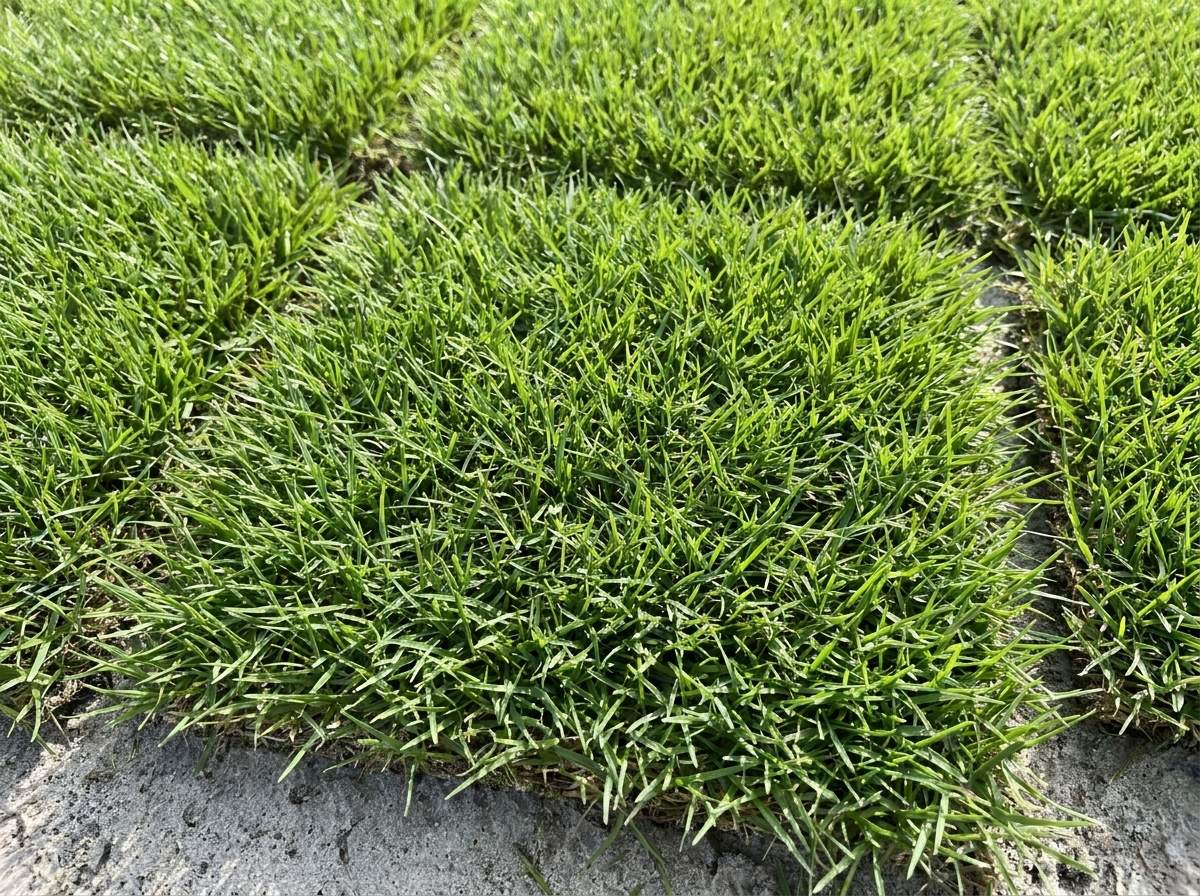
Zoysia is the premium option. It forms a thick, soft carpet that crowds out weeds, stands up to kids and dogs better than St. Augustine, and tolerates moderate shade. It is also slower: slower to grow at the farm (which is why it costs more), slower to recover from damage, and slower to fill in gaps. It is typically mowed lower than St. Augustine, around 2 to 3 inches, and benefits from a sharp mower. Watch irrigation on Zoysia — it does not like staying wet, and large patch fungus can show up in cool, damp months.
Argentine Bahia
The budget and big-lot grass. Bahia is the cheapest sod to buy and install, has a deep root system, and once established survives on rainfall better than any of the others, which makes it popular on larger, unirrigated properties in Lutz, Valrico and rural east Hillsborough. The trade-offs: it looks thin and coarse compared with St. Augustine, it struggles in shade, it throws tall V-shaped seedheads all summer that need frequent mowing, mole crickets love it, and many deed-restricted communities do not allow it in front yards.
Celebration Bermuda
Bermuda gives you the golf-course look: fine blades, dense turf and fast recovery from wear. Celebration is one of the more shade-tolerant Bermudas, but that is relative — it still wants full sun. It needs low, frequent mowing (ideally with a reel mower), regular feeding and edging because it creeps into beds aggressively. It is a great choice for an active, sunny backyard where somebody actually enjoys lawn care; it is a frustrating choice for anyone who wants to mow every other week.
Side-by-side comparison
| Grass | Sun / shade | Drought | Chinch bugs | Traffic | Mow height | Installed cost | HOA acceptance |
|---|---|---|---|---|---|---|---|
| Floratam | Full sun only | Good | Highly prone | Moderate | 3.5–4 in. | $0.75 – $1.15 / sq ft | Almost always |
| CitraBlue / Palmetto | Sun to partial shade | Good | Prone | Moderate | 3–4 in. | $0.95 – $1.40 / sq ft | Almost always |
| Empire Zoysia | Sun to light shade | Good | Less prone | High | 2–3 in. | $1.05 – $1.60 / sq ft | Usually |
| Argentine Bahia | Full sun | Excellent | Rarely | Moderate | 3–4 in. | $0.50 – $0.80 / sq ft | Often restricted |
| Celebration Bermuda | Full sun | Very good | Rarely | Very high | 1–2 in. | $0.85 – $1.30 / sq ft | Check first |
Mowing heights are typical guidance; follow the written care sheet you get with your install. Cost ranges are our installed prices — the full breakdown is in how much sod costs in Tampa.
Which sod for which Tampa yard
The full-sun ranch in Town ’n’ Country
Concrete-block ranch, a few palms, almost no shade and an old irrigation system. This is the yard Floratam was made for. Plan for chinch-bug scouting along the driveway in May and June and keep the mower set tall. If the budget is tight and the back is fenced, Bahia in the back and Floratam out front is a reasonable split. See our Town ’n’ Country page for local notes.
The oak-shaded bungalow in Seminole Heights
A 1920s bungalow under a big live oak, with sun only in the strip by the street. Floratam will struggle under that canopy. CitraBlue or Palmetto for the partly shaded areas, with the deepest shade under the drip line turned into a mulched or pine-straw bed, usually looks better and lasts longer than fighting to keep grass alive. More in our Seminole Heights guide.
The big lot in Lutz
Half an acre or more, maybe a well, maybe no irrigation in the back. Argentine Bahia covers that ground for a fraction of St. Augustine and lives on rain once established. Many owners put St. Augustine or Zoysia in the front for curb appeal and Bahia everywhere else. Our Lutz page has more.
The HOA home in Westchase
Deed-restricted communities usually spell out acceptable turf, and St. Augustine is the safe answer. Floratam for sunny lots, CitraBlue or Palmetto where the house or trees shade the yard. If you want Zoysia, get architectural review approval in writing first. Notes for Westchase homeowners are on that page.
The salty yard in Apollo Beach
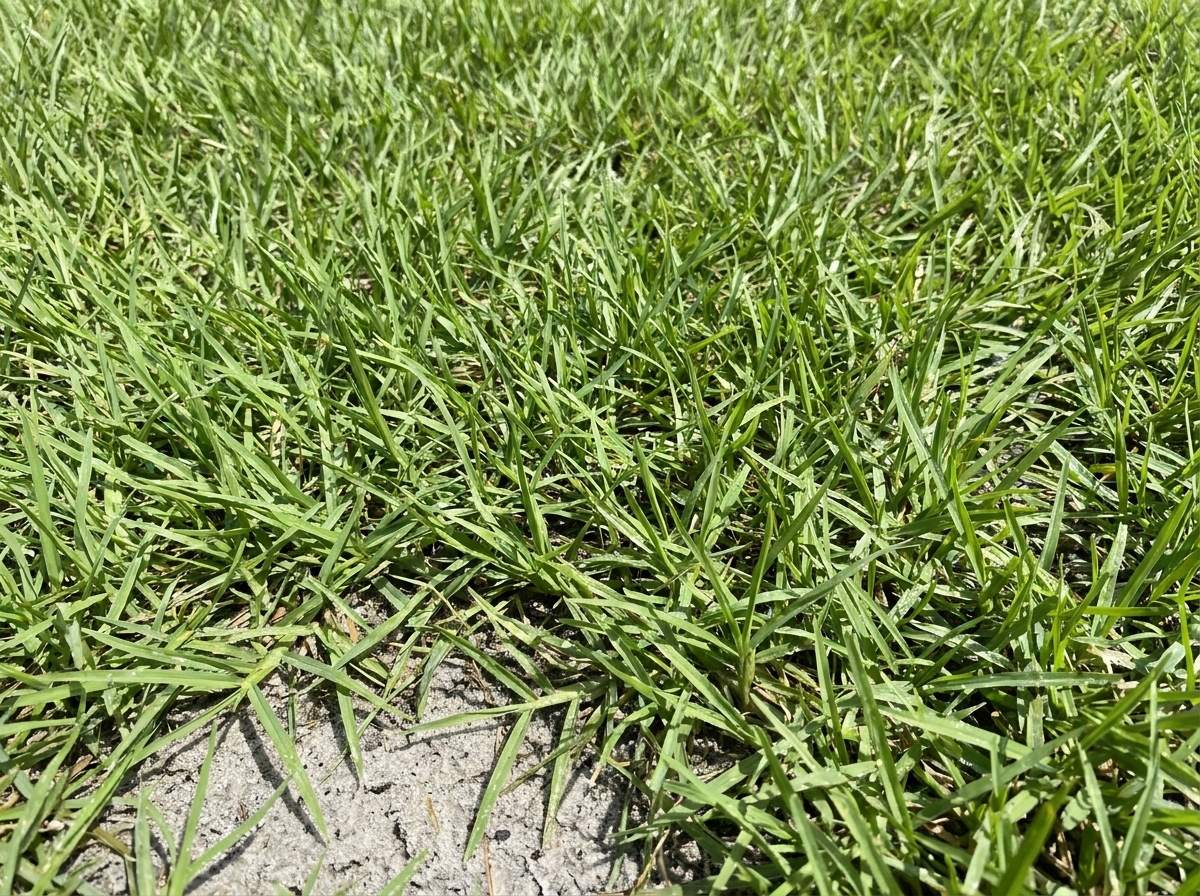
Waterfront and near-bay lots take salt spray during storms and sometimes have brackish irrigation or high-salt fill. St. Augustine has a reputation for reasonable salt tolerance, and Floratam is what most canal-front lawns already run. Zoysia also tends to handle salt reasonably well. Bahia is generally the weakest of the group where salt is an issue. After any storm surge or flooding with salt water, flush the lawn with fresh water as soon as you can. Our Apollo Beach page covers waterfront details.
Prep matters more than grass type
The most expensive sod in Florida will fail on an unleveled yard full of torpedograss with sprinkler heads buried under the new turf. Whatever you pick, the yard needs to be cleared, graded away from the house and checked for irrigation coverage first. Our step-by-step on how to prep your Tampa yard for sod walks through it, and our bed prep & leveling crew handles it if you would rather not.
Our honest recommendation
For most sunny Tampa yards, Floratam is still the best value. Pay up for CitraBlue or Palmetto where there is real shade, Zoysia where heavy use or a premium look justifies the cost, Bahia where you need to cover a lot of ground cheaply and the HOA allows it, and Bermuda only if you enjoy mowing. When we come out for an estimate on sod installation or a full lawn replacement, we check sun hours, drainage and HOA rules before recommending anything.